
About LIMC2
Shaping the Future of Living Multifunctional Materials for a Sustainable World
The Convergence Center for Living Multifunctional Material Systems (LiMC²) at Penn State brings together researchers from across disciplines and campuses to shape the future of living engineered materials. Our mission is to advance the science, technologies, and practices that will enable a sustainable and resilient world.
LiMC² is a hub for a bold and collaborative community that explores disruptive ideas—research that matters not only in the lab, but for society at large. Our teams design material systems that:
- Adapt autonomously to changes in their environment
- Withstand harsh conditions with resilience and robustness
- Harvest energy directly from their surroundings
- Incorporate sustainable components for long-term impact
By crossing disciplinary and institutional boundaries, we integrate biology, chemistry, physics, soft matter science, engineering, architecture, and sustainability research. This convergence fuels the creation of transformative materials that pave the way to a more sustainable future.
Applications
Our research spans a wide range of fields, including:
- Adaptive architecture and resilient infrastructure
- CO₂ drawdown and carbon-capture systems
- Soft robotics
- Next-generation electronics
- Materials for advanced medical care
These innovations respond directly to the global challenges of our time and open new pathways to a sustainable society.
What We Do
Catalyze interdisciplinary research in living multifunctional materials.
Partner with industry to translate fundamental discoveries into real-world impact, leveraging Penn State’s world-class MRI facilities and talented students.
Build global collaborations to accelerate sustainable materials innovation.
Educate and inspire future leaders through immersive lab and field experiences, research abroad, and a vibrant student community.
Mission
LiMC² drives a new paradigm in materials research by applying biological principles and bioinspired design to create materials that are resilient, adaptive, energy-efficient, and sustainable. Our mission is to:
- Develop sustainable materials inspired by biology and natural systems
- Foster convergence across physical, materials, environmental sciences, engineering, and chemistry
- Engage globally in education and mentoring, offering research exchange opportunities for students, postdocs, and early-career researchers
- Leverage world-class infrastructure to advance cutting-edge research and collaboration
Vision
LiMC² envisions a future where living multifunctional materials transform how society addresses global challenges. We strive to:
- Be a leading model of collaborative, multidisciplinary research with strong international partnerships
- Pioneer and deploy breakthrough materials systems that adapt, endure, and sustain
- Support bold, high-risk/high-reward research through a convergent approach
- Build and nurture a diverse community of emerging researchers equipped to lead the next generation of materials innovation
What are Living Multifunctional Materials?
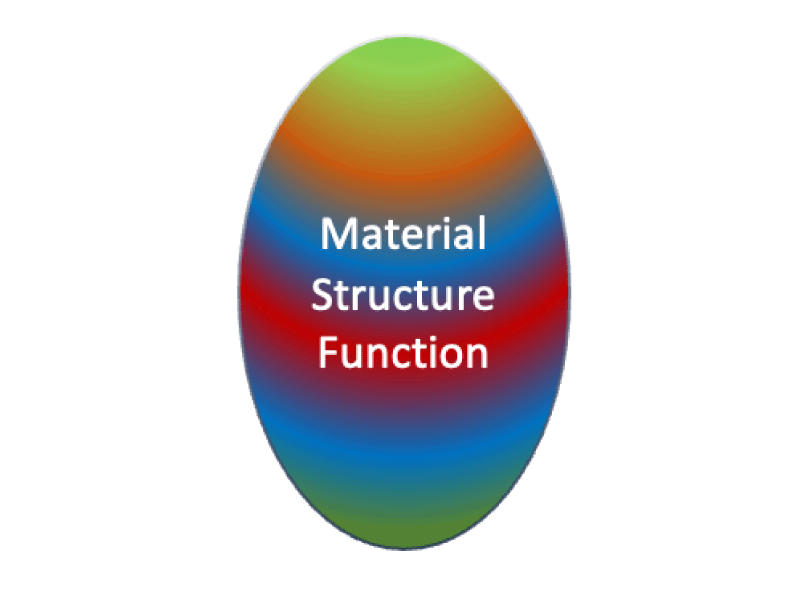
Living multifunctional materials are engineered systems that mimic the adaptive, resilient, and integrated behaviors of biological organisms. Unlike static synthetic materials, they are designed to sense, respond, and evolve in changing environments. By merging structure, function, and intelligence, these materials go beyond simple bio-inspired mimicry, incorporating life-like attributes such as adaptability, robustness, and, in some cases, the potential for self-modulation or self-replication.
In Contrast to Conventional Materials
Most synthetic materials have fixed properties that remain constant throughout their lifetime. While they can sometimes be optimized for specific stimuli, their function is generally static and isolated. Nature, by contrast, integrates multifunctionality hierarchically, from molecules to tissues to whole organisms. Living multifunctional materials aim to capture this holistic integration: they are not just inspired by natural forms or structures but engineered to dynamically interact with their surroundings through genetic, chemical, or spatial design.
From Bioinspiration to Living Multifunctional Materials
By addressing a fundamental limitation of current materials, the inability to optimize for competing properties or adapt to changing conditions, we unlock new engineering possibilities. Through bioinspired design and advanced manufacturing, we create systems that strengthen under stress, regulate heat without external controls, modulate friction in real time, and reconfigure to optimize performance across diverse environments.
Motivated by the urgent need for sustainable, resilient solutions, this research transforms how we think about materials: not as static substances, but as living, multifunctional systems designed to meet the challenges of tomorrow.
Current Material Systems
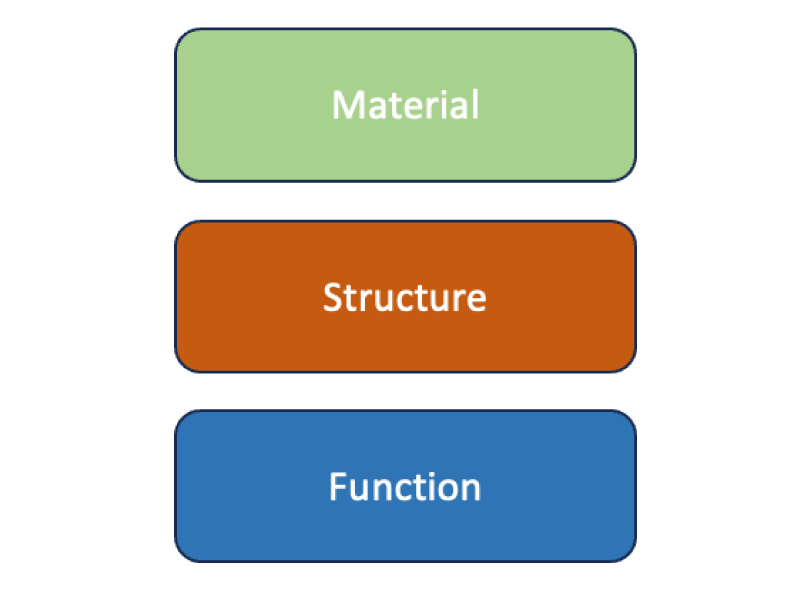
Living Multifunctional Materials
Key Research Questions
Our research tackles both fundamental science and practical translation. Some guiding questions include:
- Adaptivity: How can materials be programmed to autonomously adapt their properties in real time to environmental changes?
- Integration: What design principles allow for seamless merging of structure, function, and intelligence at multiple scales?
- Processing and Fabrication: Which fabrication methods best enable life-like, multifunctional behavior?
- Sustainability: How can living multifunctional materials contribute to sustainability by supporting circular bioeconomy concepts (e.g., renewable, self-healing, recyclable systems)?
- Applications: What societal needs, such as resilient infrastructure, sustainable energy, or responsive biomedical devices, can be addressed through living multifunctional materials?
Inspiration
Design
Fabrication
Application