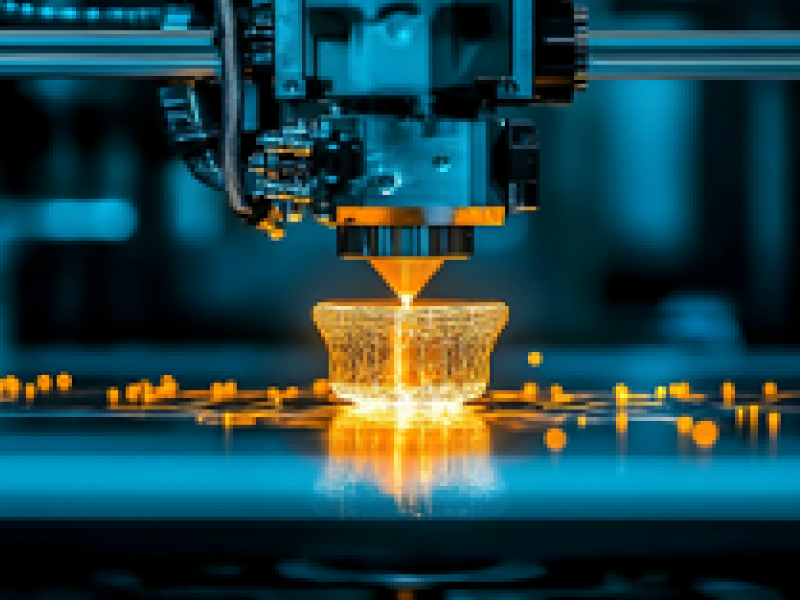
At LiMC², we are advancing manufacturing strategies that integrate biological, synthetic, and hybrid components across multiple length scales to enable the next generation of living multifunctional materials. Using bottom-up approaches such as 3D printing, we are developing methods to precisely place fillers, particles, and fibers within polymer solutions. This allows us to engineer hierarchical microarchitectures that mirror the efficiency, resilience, and multifunctionality of natural systems such as nacre, bone, and plant cell walls.
Through this research, we are creating hybrid material systems that combine complementary and often competing properties, toughness and flexibility, strength and lightness, adaptability and durability. Our approaches enable programmed assembly and spatial patterning that embed sensing, energy harvesting, and self-healing directly into materials, moving beyond replication of nature’s strategies to expand performance into new domains.
We are also harnessing the power of machine learning to accelerate discovery and design. Machine learning models reveal links between morphology, structure, and performance, creating predictive frameworks that inform our material architectures. By coupling digital and experimental approaches, we are building iterative design loops that continuously refine and optimize multifunctional systems.
Looking forward, we are committed to addressing the challenges of sustainable synthesis and scalable production to ensure that these materials are both high-performing and environmentally responsible. By uniting complementary functions across length scales, programmed assembly, spatial patterning, sustainable manufacturing, and ML-driven design, we are laying the foundation for material systems that embody the multifunctionality of living organisms while strengthening the resilience and sustainability of the built environment.